
9 Best Wedding Dress Styles for Petite Brides With Curves
Last Updated: November 12, 2026
Quick Summary
The best wedding dress styles for petite brides with curves are A-line, fit-and-flare, trumpet, sheath and column, and mermaid gowns. Each silhouette creates an unbroken vertical line or defines the waist so a shorter frame looks proportionate. Look for a flare that starts at the natural waist or mid-hip, not too low.
An A-line skirt that flares too wide or too low can swallow a short frame.
A fit-and-flare skirt that kicks out at mid-hip keeps the leg line visible.
Ask how a trumpet gown moves before you commit, since comfort matters as much as the mirror.
A sheath can be taken in at the waist and shortened at the hem.
We reserve our entire Littleton salon for one bride and up to four guests.
Short and curvy? Find your perfect silhouette
Bex Bridal reserves the whole Littleton salon for you and your guests to find a gown that fits.
Table of Contents
1. A-Line Wedding Gowns for Petite Brides With Curves
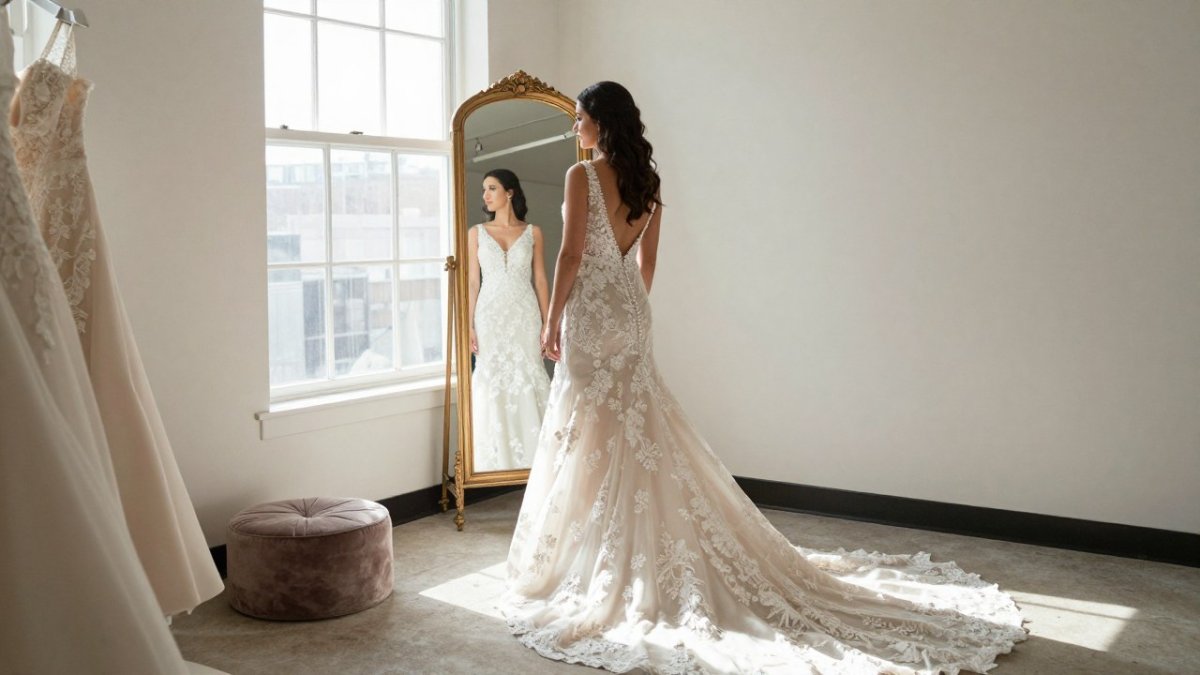
Finding the best wedding dress styles for petite brides with curves starts with one silhouette that almost never fails: the A-line. The A-line is a classic cut that flatters many short, curvy brides. The A-line is a gown that fits close through the bodice and flares gently from the natural waist into a skirt shaped like the letter A. That flare skims over the hips and thighs instead of gripping them, so curves read as soft and balanced rather than squeezed.
Why it works on a petite frame: the eye follows one continuous line from shoulder to hem, and the fitted bodice keeps the waist visible. A structured bodice adds support where a curvy bride needs it, and a V-neck or sweetheart neckline draws the gaze upward, which makes the whole body look longer.
Watch out: a skirt that flares too wide or too low can swallow a short frame. Look for a flare that starts right at the natural waist, not at the hip.
2. Fit-and-Flare Dresses That Define the Waist
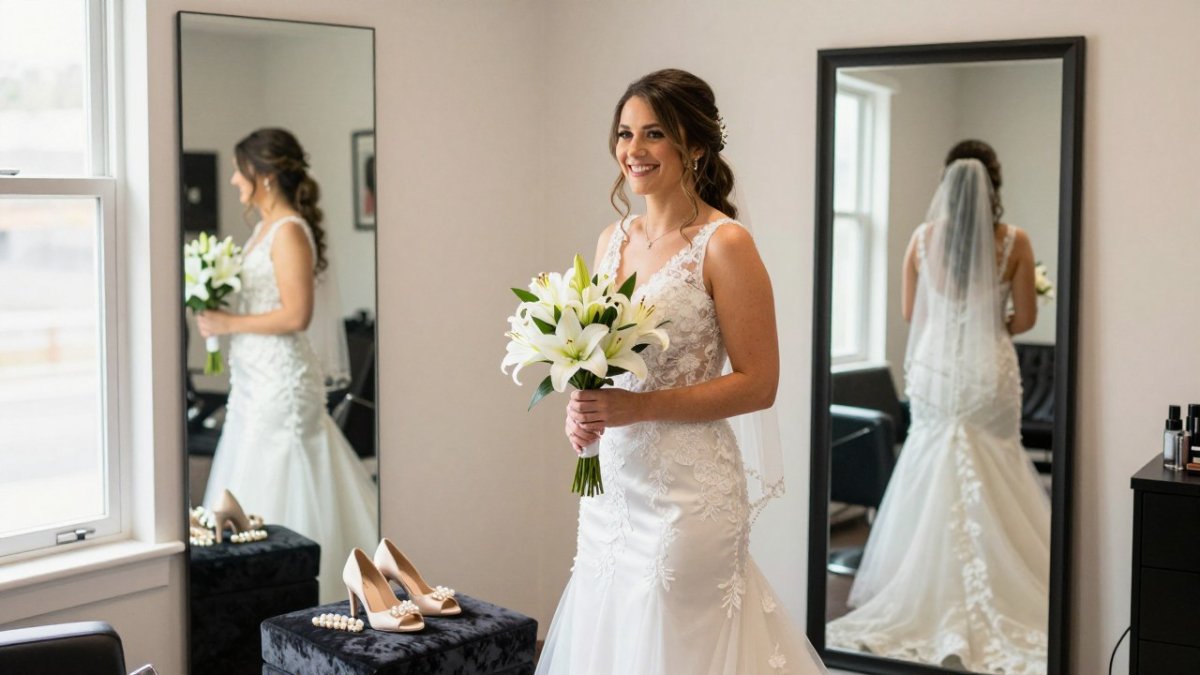
Fit-and-flare gowns are the waist-defining choice for petite brides with curves. The bodice hugs through the torso and hips, then the skirt kicks out just below the hip. That kick creates an hourglass line, and the defined waist is exactly what makes a shorter frame look proportionate.
The key is where the flare begins. On a petite bride, a flare that starts too low drags the eye downward. A flare that starts at mid-hip keeps the leg line visible and the body looking tall.
Pair the fitted top with a subtle lace or beaded detail at the waistline, and you have a dress that shows off curves without shortening you.
See a lace fit and flare gown with an open back in size 14 to picture how the silhouette sits on a real body.
3. Trumpet Silhouettes for a Longer Vertical Line
Trumpet silhouettes are the quiet lengthener of the bridal world. A trumpet gown fits through the bodice and hips, then flares gradually from mid-thigh, creating a long, unbroken vertical line from the neckline to the hem. On a short bride, that line is the whole game: it makes the body read as taller without adding volume at the sides.
For a curvy bride, the trumpet shape is forgiving because the flare happens below the widest part of the hip. It follows the body's natural shape instead of fighting it.
A common mistake is choosing a trumpet so tight through the knee that walking becomes a shuffle. Ask how the gown moves before you commit. Comfort and movement matter as much as the mirror.
4. Sheath and Column Gowns That Show Off Curves
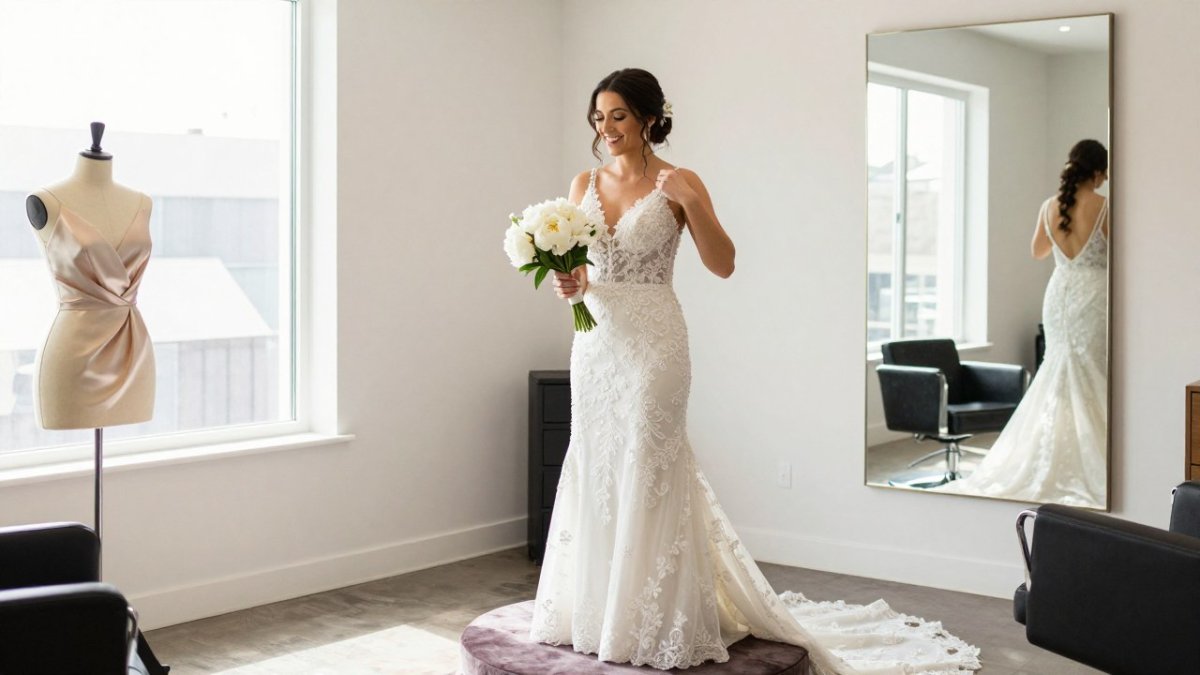
Sheath and column gowns are the most simplified option, and they suit petite brides with curves who want to show their shape rather than conceal it. A sheath dress follows the body's line from shoulder to hem with little to no flare, while a column dress keeps a narrow, straight silhouette. Both create an unbroken vertical line that flatters a shorter frame.
The trade-off is honesty: these cuts reveal every curve, so the fit has to be right. A well-tailored sheath in a fabric with a bit of give feels comfortable and looks polished. A V-neck or a delicate lace sleeve keeps the top half interesting and draws the eye up. Balancing these proportions requires a keen eye for structure, a philosophy championed by Saint Geraldine when determining how to choose flattering silhouettes for curvy bodies.
If you love the clean look but worry about the fit, this is where alterations earn their keep. A sheath can be taken in at the waist and shortened at the hem to sit exactly where it should.
5. Mermaid Styles for Petite Brides With Curves
Mermaid gowns are the boldest way to show off curves, and petite brides can absolutely wear them. The mermaid fits tightly through the bodice, waist, and hips, then flares dramatically at or below the knee. On a curvy bride, that fit celebrates the waist and hip line. On a short bride, the drama of the flare adds presence that a plain skirt cannot.
The catch is proportion. A mermaid with a flare that starts too high can cut the body in half visually. Look for a flare that begins at the knee or just below, and keep the train modest so it does not overwhelm a petite frame.

View an elegant plus sized mermaid wedding dress with a flattering V-neck and low back to see how the shape reads on a real gown.
6. Wedding Dress Alterations for Petite Brides: Costs and Timelines
Alterations are how a gown becomes yours. Most gowns are cut for a taller standard height, so hemming, shortening straps, and taking in the waist are common adjustments.
For local budgeting context, our guide to average bridal gown prices in Denver helps you plan the total cost, alterations included.
Most gowns are cut for a taller standard height, so these are the adjustments petite brides commonly need.
Adjustment | Why it is needed |
Hemming | Gowns are cut for a taller standard height |
Shortening straps | Gowns are cut for a taller standard height |
Taking in the waist | Gowns are cut for a taller standard height |
7. Simple Wedding Dresses for Mountain Venues
Simple wedding dresses for mountain venues solve a real problem: Colorado ceremonies often mean uneven ground, wind, and a long walk to the overlook. A clean A-line or sheath in a lighter fabric moves easily, photographs beautifully against a mountain backdrop, and will not fight the scenery.
Look for a gown with a modest train, a bodice that stays put in the breeze, and a fabric that moves easily outdoors. Delicate lace and subtle embellishments keep a simple dress from feeling plain without adding bulk. A soft ivory or off-white reads warm in mountain light.
This is one place where a shorter hemline or a tea-length cut can shine, especially for an outdoor ceremony where comfort matters as much as style.
8. Booking a Private Fitting in Littleton
The best way to choose among these styles is to try them on in a private setting. We reserve our entire Littleton salon for one bride at a time, so you and up to four guests can compare silhouettes without pressure. We help you find the gown that fits your body and your budget.
Understand the benefits of a private bridal appointment before you schedule, then book a fitting near you in Littleton and see these silhouettes in person.
Choosing a gown when you are short and curvy comes down to proportion, waist definition, and an honest fit, not a size label. Bex Bridal can help you find that balance with a private, one-bride-at-a-time appointment, a collection of unique gowns you will not find elsewhere in Colorado, and take-it-home-today options on samples and overstock. Get started with Bex Bridal and walk out knowing your dress fits you, not the other way around.
Frequently Asked Questions
What are the best wedding dress silhouettes for short, curvy brides?
A-line, fit-and-flare, trumpet, sheath, and mermaid styles all work well for petite brides with curves. A-line gowns skim the hips and create an easy vertical line, while fit-and-flare and trumpet shapes define the natural waist and flare below the hip. Sheath and column dresses follow the body's curves without adding bulk. The right pick depends on how much definition and volume you want, so try two or three silhouettes in one appointment to compare proportions side by side.
How can a petite bride with curves create a lengthening effect?
Focus on waist placement and an unbroken vertical line. A higher waistline, a V-neck or sweetheart neckline, and a slim skirt that flows to the floor all draw the eye upward and down rather than across. Avoid wide horizontal bands at the hip and heavy, oversized embellishments. Smaller-scale lace, delicate beading, and a soft train keep the look proportional. A tailor can also raise a waist seam or shorten a hem so the gown sits at your natural waist instead of dropping below it.
Are ball gowns flattering for petite brides with curves?
They can be, if the volume is controlled. A ball gown with a defined, structured bodice and a full skirt that starts at the natural waist balances a curvy figure and hides the lower body. The risk for a short frame is a skirt that swallows the body. Look for a ball gown with a fitted bodice, a clean waistline, and a skirt that is full but not stiff. Hemming matters too: a gown cut for a taller wearer will need shortening, so plan for alterations.
What necklines work best for petite brides with a fuller bust?
A V-neck and a sweetheart neckline are the most reliable choices. Both create vertical lines that draw the eye up and lengthen the torso, and both give structure that supports a fuller bust. A square neck can also work if the bodice is structured. Strapless gowns need a well-built internal bodice to stay put, and off-the-shoulder styles can shorten the neckline visually. Try each neckline in the mirror and check how the bodice holds without constant adjusting.
How does professional tailoring impact the fit for petite brides?
Tailoring is often what makes a petite gown look made for you. Common changes include shortening the hem, raising the waist seam, taking in the bodice, and adjusting strap length. Ask for an alteration quote before you buy, and confirm the timeline. Factor tailoring into your total budget.
Comments